મિયાં પડ્યા પણ ટંગડી ઊંચી! રમત અને રાજકારણ – અલગ કે અખંડ?

એશિયા કપની જીત સાથે ઉભો થયો પ્રશ્ન — શું રમતને રાજકારણથી ખરેખર દૂર રાખી શકાય?

તમારો પાડોશી છેલ્લા પંચોતેર વર્ષથી તમારા વિરુદ્ધ સતત યુદ્ધ ચલાવી રહ્યો છે — સૈન્યની કાર્યવાહી દ્વારા પણ અને આતંકવાદ દ્વારા પણ. તમે આ બધું સહન કર્યું, હંમેશા પ્રતિસાદ ફક્ત આક્રમણના જવાબમાંજ આપ્યો. પરંતુ હવે, જ્યારે તમારા નિર્દોષ નાગરિકો રજાઓ માણતા હોય અને તેમના પરિવારની સામે તેમની હત્યા થાય, ત્યારે તમારી સંસ્કૃતિએ શીખવેલી સહનશીલતા કાયરતામાં પરિણમે — જો યોગ્ય પ્રતિસાદ ન અપાય તો. આ હવે વિવાદ નહીં, યુદ્ધ છે.

બહિષ્કારની વાત સરળ છે પણ વાસ્તવિકતા? વારંવાર કહેવામાં આવે છે કે રમત અને રાજકારણને એકબીજાથી દૂર રાખવા જોઈએ. પણ આ સલાહ આપવી સહેલી છે, અનુસરવી કઠિન છે. જ્યારે તમારો દેશ પોતાના જ નાગરિકોના રક્તથી રંજાઈ રહ્યો હોય, ત્યારે મેદાનમાં દુશ્મન સાથે હાથ મિલાવવો વ્યર્થ લાગે છે. આવી સ્થિતિમાં રમત આપમેળે ગૌણ બની જાય છે. આપણે કહી શકીએ કે “દુશ્મન સામે ન રમવું” એ જ ઉકેલ. ન તમારી ટીમ મોકલવી, ન તેમની આવકારવી. દ્વિપક્ષીય મુકાબલામાં આ શક્ય છે, પણ બહુદેશીય સ્પર્ધાઓમાં મુશ્કેલ. સ્પર્ધામાં ભાગ ન લેવાથી તમે સ્પષ્ટ સંદેશો જરૂર આપો છો, પણ સાથે ખેલાડીઓને તેમની તકથી વંચિત પણ કરો છો. સ્પર્ધા નબળી પડી જાય છે અને રમતનો મૂળ હેતુ — સ્પર્ધા — અપૂરતો રહે છે.

આજની રમત માત્ર શોખ નથી; એ વૈશ્વિક ઉદ્યોગ છે. લાખો લોકોની આજિવિકા તેના પર આધારિત છે. અન્ય વ્યવસાયો કરતા ખેલાડીઓની કારકિર્દી ખૂબ ટૂંકી હોય છે; તેથી દરેક તક તેમના માટે નિર્ણાયક હોય છે. જ્યારે આપણે ખૂબ સરળતાથી બહિષ્કારની સલાહ આપી દઈએ છીએ, ત્યારે આ હકીકત ભૂલી જઈએ છીએ. ભારતને આવી સલાહ ભારતની બહારથી બીજા દેશોના ખેલાડીઓ અને વિવેચકો તરફથી પણ ખૂબ મળી; એવા દેશો કે જેમનો ઇતિહાસ કહે છે કે તેઓ રાજકારણને રમતથી દૂર રાખવામાં સદંતર નિષ્ફળ ગયા છે! ઇંગ્લૈંડ અને ઓસ્ટ્રેલિયા, બન્ને જ્યારે માફક આવે ત્યારે રાજકારણ કરે અને માફક આવે ત્યારે સલાહ આપે! આ તેમના માટે સ્વભાવગત વાત છે. આ બન્ને દેશોને આતંકવાદનો અનુભવ ભારતના પ્રમાણમાં ઘણો ઓછો છે. પોતાની ધરતી ઉપર યુદ્ધ થાય ત્યારે સાચો અનુભવ થાય. કહે છે ને કે જ્યાં સુધી પગ નીચે રેલો ના આવે ત્યાં સુધી સલાહ આપવી સરળ છે!

ભારત માટે તાજા સંજોગોમાં એક સહેલો જવાબ હતો — ભારતે એશિયા કપમાં ભાગ ન લેવો જોઈએ. ભારતમાં રાજકીય વિરોધીઓએ એ જ માગણી કરી, સોશિયલ મીડિયા પર અભિયાન ચલાવ્યાં, ટીવી તોડ્યાં. પરંતુ તેમણે પરિણામો વિચાર્યા? ભારત વિના આંતરરાષ્ટ્રીય ક્રિકેટ પરિષદ (ICC) નું ટૂર્નામેન્ટ ચલાવવું મુશ્કેલ બને, કારણ કે મોટાભાગના સ્પોન્સર ભારતીય બજાર પર આધારિત છે. ઇંગ્લેન્ડ અને ઑસ્ટ્રેલિયાના વિશ્લેષકો વારંવાર ભારતને “વિશ્વ ક્રિકેટનો મોટો ભાઈ” હોવાના અને તે પ્રમાણે તેમનો અભિગમ અપનાવવાની સલાહ આપતા રહેતા હોય છે. આ સંજોગોમાં ભારતની હાજરી અનિવાર્ય છે.

બીજી તરફ, પાકિસ્તાનને આથી લાભ માત્ર છે — તેની ક્રિકેટ વ્યવસ્થા ભારતીય દર્શકો અને સ્પોન્સરોના પૈસાથી ચાલે છે, ભલે તેનું રાજકીય તંત્ર આતંકવાદને ટેકો આપતું રહે. આ વિપરીત પરિસ્થિતિમાં ભારત અને BCCI માટે વિકલ્પો ખૂબ મર્યાદિત રહી જાય છે. છતાં ભારત સરકારે વિસ્તારપૂર્વક વિચાર કરીને ભારતની ટીમને એશિયા કપમાં ભાગ લેવાની મંજૂરી આપી.

પણ ખેલાડીઓ નું શું?

ખેલાડીઓ કરારબદ્ધ વ્યાવસાયિકો છે; પોતાના નિર્ણયથી મેચ ન રમવાનું પસંદ કરી શકતા નથી. તેથી તેમની લાગણીઓને વ્યક્ત કરવાની એક માત્ર રીત પ્રતીકાત્મક હતી — દુશ્મન સાથે હાથ ન મિલાવવો. આ હાવભાવ તેમની અંદરની વેદનાનું પ્રતિબિંબ હતું. સ્વાભાવિક છે કે કેટલાક લોકોએ તેને “અનૈતિક” અને “ખેલભાવના વિરુદ્ધ” ગણાવી દીધું. પરંતુ આ એ જ લોકો છે, જે પોતાના હિતમાં રાજકારણને રમતમાં ઘૂસાડી દેતા બિલકુલ અચકાતા નથી, અને તક મળે ત્યારે ઉપદેશ આપવાનું પણ ચુકતા નથી કે “રમતને રાજકારણથી દૂર રાખો.”

પુરસ્કાર વિતરણ દરમિયાન પાકિસ્તાનના આંતરિક મંત્રી અને એશિયન ક્રિકેટ કાઉન્સિલ (ACC) ના પ્રમુખ મોહસિન નકવી ભારતના વાંધા છતાં પોતે ટ્રોફી આપવા તત્પર રહ્યા. તેટલુજ નહીં, પણ જો ભારતીય ટીમ તેમની ઈચ્છા વિરુદ્ધ જાય તો તેમને ટ્રોફી અને પદક આપવાની ધરાર ના કહી ટ્રોફી લઈ પોતાની હોટેલ ચાલ્યા ગયા! જાણે ટ્રોફી તેમના બાપની જાગીર હોય! મેં આવી બાલિશ વર્તણુંક અત્યાર સુધી કોઈ પણ પ્રશાસક  તરફથી જોઈ નથી. તે ભલે નાનામાં નાની સ્પર્ધા હોય કે આંતરરાષ્ટ્રીય સ્તર ની. એક સાચા પ્રશાસક માટે ખેલનો આત્મા સર્વોચ્ચ હોવો જોઈએ — પોતાનો અહંકાર નહીં. વિજેતાઓને તેમના પદક અને તેમનું સન્માન મળે તે વાત વધુ અગત્યની છે, કોણ ટ્રોફી આપે તે નહીં. નકવી ઈચ્છતા તો વિવાદ ટાળી શકતા, પણ તેમણે રાજકીય નાટકને પસંદ કર્યું. પરિણામે, રમતની પ્રતિષ્ઠાને નુકસાન થયું. અને આ વિવાદ માટે માત્ર ભારતને દોષ દેનારા, દેશની બહાર કે દેશની અંદર; ક્યાં તો પોતાની આંખે પાટા બાંધી ચાલનારા છે કયા તો નકરા દંભી!

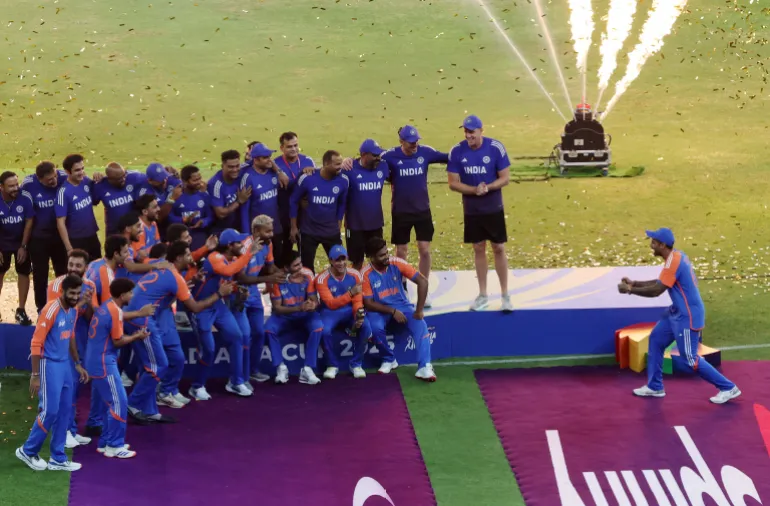
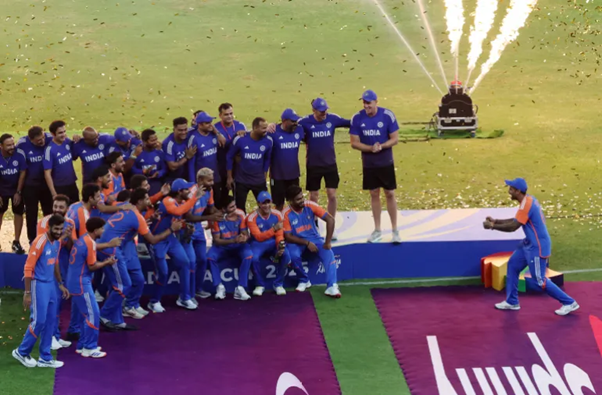
આ તમામ નાટક છતાં ભારતે એશિયા કપમાં નવમી વાર વિજય મેળવ્યો. ટ્રોફી વ્યક્તિગત રીતે ન મળવી તે એટલું નુકસાન નથી, જેટલું ACC અને તેના પ્રમુખના વર્તનથી રમતની ગરિમાને પહોંચ્યું છે. ભારતે કંઈ ગુમાવ્યું નથી — પરંતુ રમતને ઘણું ગુમાવવું પડ્યું છે.

આગળ શું?

આ પ્રસંગ કદાચ એશિયન ચેમ્પિયનશિપ માટે એક ટર્નિંગ પોઇન્ટ સાબિત થશે. મારુ માનવું છે કે આ સ્પર્ધા હવે મૃતપ્રાય થાય અથવા થોડા દશકો પૂરતી સ્તગીત થાય. ACC પણ વિલંબિત પરિસ્થિતિમાં રહેશે. પાકિસ્તાનમાં પણ હવે એવી માંગ ઉઠશે કે તેઓ ભારત સામે ન રમે. વારંવાર હારની પીડા એક કારણ જરૂર હશે, પણ ભારતના કડક વલણના કારણે તથા બળતામાં ઘી હોમવા જેવી મોહસિન નકવીની બાલિશ હરકતના કારણે સામાન્ય લોકોને થયેલી અપમાનની લાગણી એ મોટું કારણ બનશે. મારી દ્રષ્ટિએ આ સૌથી વધુ અગત્યની વાત છે. અત્યાર સુધી ભારત એક ગાલ પર તમાચો ખાઈને બીજો ગાલ ધરતું રહ્યું હતું અને પાકિસ્તાન ભારતના તંત્રને જીભ બતાવીને લલકાર્યા કરતું હતું. લાંબા સમયથી રમવું કે નહીં તે નિર્ણય લેવાની જવાબદારી માત્ર ભારત પર હતી. હવે પહેલી વાર પાકિસ્તાનના વહીવટી તંત્રને પોતાના લોકોના દબાણનો અને ભારત સામે રમવાના નિર્ણય સામે વિરોધનો સામનો કરવો પડશે. પગ નીચે રેલો આવી રહ્યો છે. પાકિસ્તાન માટે આ એક નવી પરિસ્થિતિનું નિર્માણ છે તેવું મારુ માનવું છે. જોકે પાકિસ્તાનમાં સામાન્ય અવામને ભાગ્યે કોઈ સાંભળતું હશે. પણ હું માનું છું કે નકવીના આ નાટકથી, અંદરખાનેથી ત્યાંનો  નિર્ણાયક સમુદાય પણ નાખુશ હશે. નકવી ભલે ભારતને ટ્રોફી ના લેવા દઈને ખુશીથી ફુલાતા હોય; ભલે તેમના સોશિયલ મીડિયાના કલાકારો સાચી પરિસ્થિતિ છુપાવવા પ્રયત્નશીલ રહે. હકીકતે તો પાકિસ્તાનના ક્રિકેટતંત્રને એક તમાચો કદાચ પહેલી વાર લાગ્યો છે, જે વાત અત્યારે નહીં પણ થોડા સામે બાદ તેમનાજ ચાહકો કહેશે. ગુજરાતીમાં એક સરસ કહેવત છે; મિયાં પડ્યા પણ ટંગડી ઊંચી! આ ટંગડી ક્યાં સુધી ઊંચી રહે છે, તે સમય કહેશે..

Asia Cup Conundrum: Sports, Politics and Limits of Tolerance!

You have a neighbour who has waged war against you for over 75 years—militarily as well as through terrorism. Throughout this time, you have tolerated, responded only when provoked, and shown restraint rooted in cultural tolerance. But when your civilians are massacred in cold blood, while on holiday with their families, tolerance begins to border on cowardice—unless there is an adequate response. At that point, it is no longer a dispute; it is war.

We often hear the wise say that sports and politics should not mix. Yet this advice seems much easier to give than to follow. When your nation is reeling from continuous bloodshed, shaking hands with the enemy—even on a sports field—feels like an empty gesture. In such an atmosphere, sports inevitably becomes secondary.

So, what is the solution? At first glance, it seems simple: do not play against the enemy. Do not send teams there, do not host theirs, and halt all cultural and sporting exchanges until the situation stabilizes. Straightforward enough in bilateral contests. However, at global or multi-nation tournaments, the question becomes more complicated. Opting out of participation does send a firm and symbolic message, but it also carries significant implications. It denies athletes critical opportunities, undermines the competitiveness of tournaments, and deprives fans of the very essence of sport—the contest.

Sport today is not a pastime but a global industry. Millions depend on it for their livelihood. Unlike engineers, doctors, or bankers, whose professional careers can last decades, athletes have a brief window to perform and earn. Every contest counts—it is the culmination of years of preparation. Too often, when we call for boycotts, we overlook this reality.

This brings us to India’s recent situation. The seemingly easy answer was: India should not have participated in the Asia Cup. Indeed, political opponents and public voices called for a boycott, supported by hashtags and even street hooliganism, such as breaking televisions showing the games. Yet, they ignored the larger impact. If India withdraws from multilateral competitions, the International Cricket Council (ICC) suffers financially. With the majority of sponsorships dependent on India, ICC events would struggle to survive without Indian participation. Experts from England and Australia often remind India that, as the “big brother” of world cricket, its presence is essential, even at the cost of its own sentiments.

Pakistan, on the other hand, benefits from this structure—its cricketing system survives on revenues generated by Indian audiences and sponsors, even while its administration fuels terrorism across the border. This paradox places the BCCI in a Hobson’s choice. And yet, India’s government, understanding global responsibilities and long-term implications, allowed participation in the Asia Cup.

But what of the players, caught in this crossfire? They are professionals contracted to the BCCI, with little personal choice in the matter. Their only avenue to express solidarity with victims and dissatisfaction with the situation was symbolic gestures—most notably, refusing to engage in handshakes. Predictably, critics labelled this “unsportsmanlike,” ignoring the hypocrisy: those who insist politics should stay out of sport are often the first to inject it selectively when it suits them.

The controversy intensified during the presentation ceremony. Pakistan’s Interior Minister, Mohsin Naqvi, who also heads the Asian Cricket Council (ACC), insisted on personally presenting the trophy despite India’s objections. An administrator’s role is to serve the spirit of the contest, not personal ego. The winners receiving their prize is more significant than who hands it over. Naqvi could have easily avoided the controversy by delegating the task—but instead chose political theatre over sportsmanship.

India, ultimately, lost nothing of substance. The team secured a record eighth Asia Cup title. The trophy presentation, or lack thereof, is symbolic—the real loss was to the credibility of the ACC and its leadership, who failed to uphold the dignity of sport.

So, what lies ahead? Possibly, the end—at least temporarily—of ACC championships. Even in Pakistan, voices may rise against matches with India, as public humiliation must have intensified with off-field drama. For decades, India alone bore the burden of choice—whether to play or not. That equation may finally change, with Pakistan’s administration beginning to feel the pressure of its own public sentiment.

DRS through a Microscope. Eagle Eye or Hawk Eye, but not the Bull's Eye!!

Is DRS a Decision Review System or Dead Revived System? Looked like it was laid to rest after India’s tour to the Old Blighty, when ICC declared it no longer mandatory. However, no sooner did the Indian team arrive down under, the issue has been raised thanks mainly to the Eagle Eye technology owner or supporter, Channel Nine, who seem to be convinced that their word on everything in world cricket has to be final. Sky TV commentary team in England did the same and gleefully, trumpeted poetic justice, every time a decision went against Indians…till VVS Laxman was reprieved by the so-called infallible “Hot spot” technology (use of Infrared camera to detect contact between bat and ball). Michael Vaughn’s infamous tweet about Laxman’s cheating by applying Vaseline on the edges of the bat to “hide” the hot spot, proved at least one thing, irrevocably; EVERY ONE is still suspicious about the capability of ANY technology to be 100% correct. Something that Indian captain Mahendra Singh Dhoni has been saying for ages. That shut up the Sky TV channel commentary team for sure. Poms and Aussies have this endearing quality of coming around to what is obvious only after they have suffered!!!

However, looks like the inventors of the technology and investors of big bucks in them, are not going to die so easily. Especially when you have the best possible medium of TV and assured contract to beam free-to-air live cricket to the masses, you want to use that to push a technology even if it is still in its infancy. That is, what DRS actually is. Not surprising then, why after the first day of the Boxing day test in Melbourne, Crime master Gogo was seen asking all and sundry, “Yeh DRS DRS Kya Hai, Yeh DRS DRS Kya Hai?”

I want to show you DRS through my microscope. Before we do that, however, understand this; DRS is not merely applying all available technology to arrive at correct decision most of the times, as it is touted to be. Let me clarify. DRS or Decision Review System is a “PROCESS” set up by ICC to give SOME opportunity to players to question on-field umpire’s decision. IT IS NOT AN ATTEMPT AT GETTING ALL DECISIONS 100% CORRECT!!! This is where a cricket fan is being taken for a ride.
The reason for my above argument? In every innings, both teams are given ONLY TWO opportunities to question umpire’s decision. Once you loose both opportunities, you have no right to question Umpire’s decision. In other words, after you have lost both of your appeals, an umpire is ALLOWED to make mistakes!!! Let us presume this system was used in the infamous Sydney test match of 2008, of monkey-gate fame. Even before Andrew Symonds was given not out to a blatant thick edge of Ishant Sharma, Ricky Ponting was reprieved by Mark Benson, off Saurav Ganguly; a possible faint edge. Let us say that Indians reviewed and had lost that appeal since hot spot is not necessarily a full-proof technology. Subsequent to that, on that first day itself, Andrew Symonds was reprieved twice on stumping appeals, once by the third umpire who had the benefit of the technology of a slow-mo replay, even when it was obvious to a blind that Symonds was out. Indeed, even the Channel Nine commentators had given the verdict as out. This means Indians would have lost both of their appeals on the first day itself, possibly even before tea!! What good would this so-called high tech DRS would have done for the good of cricket in this case? The results could still have been the same; jaundiced decision making from one-eyed and motivated umpires.
There is also another example of MS Dhoni given out in spite of the bowler having over-stepped in West Indies this year, simply because the technician brought up WRONG REPLAY, or better put, replay of legal delivery stride from another delivery!!! All that talk about technology being savior of the world cricket makes no sense when the control of decision making goes into the hands of a total outsider who may be motivated by commercial interest of the technology provider.
Last week I heard Channel Nine commentator Tony Greig lamenting about the lack of use of the Eagle Eye that they use to judge the umpiring performance. He went on and on like a broken record about how Indians through their power of money are in fact acting against the interest of the game!! He also quoted other sports people from USA who, according to him, were astonished that Cricket refuses to use technology and has still remained an18th century sport. Ah, the beauty and benefit of having the platform to dish out drivel!! The only choice poor audience has is to shut off the TV, isn’t it?? There were references made to another ball tracking system called Hawk Eye, which according to the geniuses at Channel Nine is a very inferior technology, merely due to the number of frames captured per second, and perhaps the reason why Indian cricketers hate DRS.

I brought out this issue in one of my previous blogs, and received a very interesting comment from one reader who claims to be the inventor of Eagle Eye tracking program; one that is touted as Bee’s knees by Channel Nine and the whole of Australian fourth estate. Paddy’s comments are presented below, verbatim:

–>“I wrote the Eagle Eye tracking system. It works like this… All the measured points over all frames triangulate to 3D ball positions of the flight. Given there is a factor of noise, pixel error, measurement error etc, these form a probability distribution. The system then attempts to solve a multivariate equation of flight that most closely matches this distribution. This involves deriving obvious things like initial position and velocity, flight characteristics such as lift and drag, and more importantly fluid dynamics tailored to the flight of cricket balls. There are a few tricks in here that compensate for numerous things that cannot be measured. The result is a large equation that can be used to regenerate the ‘actual’ trajectory of the ball and extend it past the point where observations cease (ie impact on the pad). Having more frames helps this process. As you pointed out, the physics after the bounce is completely separate from that leading up to the bounce. The more data that can be collected post-bounce, the better the chance of calculating the more obscure components of flight. Operating at 230fps means every frame captures about 10cm of travel. So most of the time, enough data is captured for an informed prediction. When there is not enough data, there is a roll-off built into the system whereby factors such as swing, lift, drag and even bounce deviation cannot be sufficiently derived. Attempting to do so generally leads to solutions that look wrong. The best answer in extreme cases is found by dropping the higher-order components of drag, ignoring lift, assuming the ball does not deviate after bounce, and presume no post-bounce swing is in effect. The system is not bullet-proof, and I disagree with the assumption that “Eagle Eye is twice as good as Hawk-Eye”. The two systems are totally different and each have their strengths and weaknesses. However, it is a fact that the more frames you capture, the better your chances of predicting in extreme situations. I think it’s important to remember that the UDRS was supposed to prevent gross misjudgments. There are limits, and they should be scientifically explored. The ICC ‘testing’ done on either system is a joke.”

There you go….I have no way to confirm that the writer is the originator of the Eagle Eye program or that he is not. However, the comments very well describe the logic behind defining algorithms for tracking the flight of the ball. It is obvious from the above comments that there are sufficient doubts about the validity of either tracking system; and most importantly, none of the system is “scientifically explored” sufficiently. Exactly the point I made in my blog. Also, interestingly, the originator accepts that the algorithms can not predict accurately, complex factors such as “swing, lift, drag and even bounce”. This means, prediction of the flight of the ball post impact (after it has been intercepted by the batsman) is very difficult. Perhaps that is why we saw the drama of DRS not applied during the World Cup, when the distance between the pad and stumps was more than 2.5 meters. Indeed, increased data in the form of more picture frames per second gives a better opportunity to predict the flight of the ball post impact, and to that effect Eagle Eye may be better than other technology. However, even high frames per second will not be able to predict changes in bounce, pace and turn off the wicket, that eventuate as the pitch changes its nature during the course of the test match. Forget about the difference in every ball that a bowler is able to employ, e.g. cocked wrist versus loose wrist while delivering a ball, that can generate different pace off the wicket. So when one can not be sure about the validity of this tracking system to predict the flight of the ball from day one to day five on the same wicket, how can one be confident that it can perform with acceptable accuracy, across all types of wickets; from a low slow subcontinent to a spongy English to a Perth or a Centurion bouncing one. One thing is certain: the originator of the Eagle Eye is saying that ICC has not done sufficient testing on either tracking system!!! Does it not then, sound a bit rich, Channel Nine’s constant tirade against Mahendra Sigh Dhoni, or his team or indeed BCCI in not accepting DRS? Why this uni-directional tirade using questionable evidence, called BCCI bashing? Ihas now become the favorite past time of some Cricket playing countries ……Tony Greig, take off that mask of being a savior of world cricket please. You are nothing but a mouth-piece of a commercial venture, looking to pass off its yet incompetent technology. Cash for comments, of course, what else??
Let us not forget that DRS does not consist of technological solution to get only LBWs correct.It also includes other technologies like “Hot Spot” to detect a nick; something that looked to be the only infallible component of the system, till that fateful Laxman-Vaughn episode. Now that technology looks as much dicey as the tracking system. Perhaps the only technology that is close to being 100% correct is the pitch map; to confirm if the ball has pitched within the statutory area as per the LBW law. I full heartedly agree that this technology must be used to provide on-field umpire the required support. As for other decisions like stumping and run outs, TV slow-mo replays have been accepted long back, even though they have produced wrong decisions, for a variety of reasons. Andrew Symonds’ stumping, is a cases in point.

http://www.youtube.com/watch?v=92zqspN3W2c&feature=related

So it is obvious that there is sufficient doubt about the capability of the tracker system to predict the path after impact. Let us leave that aside for a moment and accept that even if not 100% certain, the technology will give a prediction of the flight of the ball, somewhere close to an umpire’s eye and brain. I am ok, if the technology comes somewhere close to human capability, since it has one thing which is better than a human mind. Technology can not be “pressurized”, like an umpire can be, under extreme conditions. So one can accept the fallibility of the system to the level of a human mind; with a caveat…”as long as ICC officials manage the technology”. This is to prevent commercial interests from influencing the decision making. Or tomorrow’s headlines will read something like..”TV technicians being investigated for Match fixing”..
Apart from the uncertainty of technology, my grouse against the DRS system, is the process of giving right to the players to challenge umpire’s decision. That is eroding the very basic tenet of this game; a player shall accept umpire’s verdict. Yes, on-field umpires can do with the support from technology, no doubt about that. But instead of players being given TWO appeals to get their decision right (!!), I would like to see that process completely in the hands of on-field AND third umpires. Both should work in unison. The TV umpire should have a say in every contentious decision and he should have a right to communicate or indeed over-turn on-field umpire’s decision if he sees evidence to do so. In this system on-field umpire’s role does become more of a constant partnership with the third umpire. There is a potential for slowing down of the game, but by now it seems every one has accepted that extension of the game time is not important if right decision could be made. Don’t know though, how this will allow ICC to maintain minimum 90 overs a day requirement. Let the players be players rather than trying to be umpires also..
As the system has “evolved”, there is a slight change to the name. UDRS has become now DRS. Looks like ICC has decided to take the U (Umpire) out of the name. Yes, literally that is what the system is meant to do. While the supporters of this so-called bee’s knees technology claim that it is to support umpires, in actual effect, its practical purpose is to take an umpire out of the decision making…..slowly slowly, completely; well, if not today, tomorrow.

Malcolm, who are you Conning?

Reading an interesting article by News Limited’s Senior Cricket Correspondent, Malcolm Conn in the Sydney Daily Telegraph of Sat, 6-Aug-11, just confirmed a few things I already know. Since this article is unavailable on-line, it is given below verbatim, in full, including two pictures.
_________________________________________________________________________
 Why India doesn’t want to know about the technology that Australia can bring to Umpiring decisions: Malcolm Conn

These photos prove why India has been using third rate technology as an excuse to stop video umpires ruling on the leg before wicket decisions.

The photos (left) with the spars red dots highlights the cheap and inaccurate system the International Cricket Council used during the recent World cup, which raised India’s ire.

The tightly packed white dots in the photo (right) shows the space age technology Channel Nine began using last season and will use again for the New Zealand and India series this summer.

The system used by the ICC through normal television cameras tracked the ball 26 times on its journey from bowler to batsman. Channel Nine’s new technology, using six high speed cameras and fibre optic cable, tracks the ball 130 times on the same path, offering far greater accuracy. Nine now uses Eagle Eye, which is twice as good as the previous Hawk Eye and far superior to ICC’s third rate system.

Executive producer of Nine’s cricket coverage, Brad McNamara, fears confusion this summer because the full system will be used in two Tests against New Zealand but lbws will be excluded for the following series against India. “It will be interesting to see what happens,” McNamara said.

Ricky Ponting is baffled as the rest of the cricket world by India’s refusal to use technology that improves the accuracy of umpiring decisions.

END OF THE ARTICLE
_________________________________________________________________________

There you go…I am sure you will be surprised as much as I am to read some oxy-morons in above writing. By calling ICC’s current technology (or Hawk Eye) as third rate and THEN saying India is using it as an EXCUSE to prevent UDRS is a typical jaundiced-eye, chip-on-the-shoulder, holier-than-thou western writing born out of immensely undiluted acidic reflux, that simple people like me call “jealousy”. If the Hawk Eye is third rate (he has used that qualification twice in the article), then isn’t India’s stand on refusing to use it vindicated? D’uh?? Probably, Malcolm, that is what you also want to say, but something prevents you from saying? If the so-called high-profile writers are really keen to assess truth, won’t you expect them to ask that question to the businesses commercializing the technology or its inventors? Won’t it be logical to ask why Hawk Eye has NOW agreed to do more tests and generate data before ICC can accept it, only after BCCI and Indian team refused to accept it? I will tell you why. Because that would simply vindicate what Indian players and BCCI all along have been saying; that technology is still not fool-proof and they are correct in going with the on-field umpire’s decision!! Instead of calling that as the real spirit of cricket, Indians are being pole-axed, in writings and TV commentaries. If claims in Malcolm’s article are correct about Hawk Eye being third rate, it makes me wonder why all Pommy commentators on Sky commentary team in the current India-England series, are so keen to incessantly blame BCCI for not accepting that.

Let me be very clear; I am seriously impressed with all the “space-age” technical mambo-jumbo about high fps (frames per second) pictures delivered by fiber optic cable and ball tracking capability increasing by 130/26 = 5 times!! Wow! That’s awesome, isn’t it? So Malcolm, could you please tell me what fps is required now, to make the on-field umpire redundant??

I am yet to see hard core evidence that DRS of any kind, Hawk or Eagle, is fool-proof. And if not fool-proof, why not wait till more evidence is available? I will tell you why. Inventors need money to perform their experiments to generate data. By clever marketing gimmicks like these, all they are trying to do is get ICC and individual cricket boards to cough up the money to fine tune their “third rate” technology. What they do with that technology after it is developed sufficiently to be commercialized for other uses, is no concern of cricket boards or ICC. The commercial exploitation will line up the business’s pockets. Hey, here is a gravy train. Let us jump on it; poor old cricketers who are now writers or commentators of some reputation, and those who have missed the gravy train, just can’t resist this, now can they? And who would blame them? Of course for poor, all believing simpleton cricket fans like me (don’t know about you), it is all in the interest of improving the game….oh yeah??

Don’t get me wrong; I am no techno-phoebe. Quite the contrary; for a person who had not seen a computer, let alone use it, till the age of 37, I am pretty good at taking up technology. (if this blog is any evidence). I love the idea of incorporating new technologies to improve the game. However, being a scientist, I like to see experimental data under controlled conditions. Malcolm doesn’t give any proof to his claim in this article, that “Channel Nine’s Eagle Eye is TWICE as good as the Hawk Eye, and far superior to ICC’s third rate system”. I am sorry, mate, I can’t understand. If the ball tracking along the path is 5 times more (130 to 26) than ICC’s third rate Hawk Eye, isn’t it 5 times more efficient? Modest Malcolm, certainly sounds oxy-moronic! Perhaps Eagle Eye has some data somewhere, but they are not comfortable in releasing/publishing that as yet. Perhaps by utilizing the big guns of the fourth estate (and fifth, being TV) they are aiming to obtain sufficient funding for their project? Cash for Comments? Those of us who live in Australia and are avid fans of yak-back radio, would surely recognise the syndrome, won’t we??

If I was a Hawk or Eagle Eye inventor, first thing I would do is to publish that data to get confidence of players, officials and fans like me. I am yet to see that.

You know what, Malcolm, you have still missed the most important point in all this. Improving the ball tracking efficiency is great. What I fail to understand, is how does it improve PREDICTIVE PATH of the ball AFTER it has been intercepted by the batsman? What algorithms are used to extrapolate that path? Try and pitch the ball with the same energy (or pace) on same spot on day one and day five wicket, and I am sure it will travel differently; bounce and carry will vary significantly. Even when the ball hits either seam or the leather sides, it travels differently, from the same spot on the same wicket. That is one reason why top quality cricket is played on turf and not synthetic wicket. That is why we have been lamenting so much in recent times that cricket has become so much of a batsman’s game, as wickets are now covered. That is why labels like “Flat track bullies” are applied to recent high scoring, record breaking batsmen when compared to past greats like Bradman, Hobbs or Hadley. Also, if a bowler bowls with a loose or cocked wrist, the ball travels at different pace after hitting the wicket. Often the ball swings after pitching in certain conditions. How will the so-claimed space age Hawk or Eagle Eye totally dependent upon the software algorithms, be able to pick up all of that?

At the end of all these arguments, I believe a well trained/experienced umpire’s brain is the best available technology……still! Yes, they can be helped to some extent, by some technology to take the pressure off them. I like the ball pitch map, that tells an umpire without any doubts whether the ball pitched within the critical area or not. I am not convinced that an umpire’s decision about the predictive path of the ball after it has been intercepted by the batsman, will be any less accurate than a set of high tech, high fps camera feeding the optic fibre and a computer. If all the technology was better than a well trained human brain which can re-calibrate it self after every ball, using the available information (as compared to a static software that needs input from data interpreted by a human), then why do we need human umpires??? No balls, number of balls bowled in an over, bowler or a batsman transgressing on playing area; all that can be done better by a machine. So umpires will be required only to listen to the quality of sledging and enforce what is bandied around these days as the spirit of cricket? So human umpires will become Cricket Cops? You, all of those who seriously swear by DRS, can you imagine how robotic the game will be? OK, you may argue, as long as correct decisions are made. Fair enough. However, is there a guarantee that even with the best available technology, 100% correct decisions will be made? That is why I still prefer Rauf Eye or a Taufel Eye over a Hawk Eye or an Eagle Eye.

You know what, being humans, we will forgive a human error, some times, eventually; but not a machine. Believe you me, if we have machines controlling games, it will become far more acrimonious because there will be claims that machines are more easy to manipulate than humans. With the kind of high tech mambo-jumbo, not every one’s cup of tea to understand and control, the power of controlling the outcome of a game will shift into the hands of a handful of technicians, who instead of representing ICC and game, will be representing the commercial businesses owning/operating the technology. We saw how DRS was either manipulated or erroneously used in recently concluded  India V West Indies series, when the technician could not (or did not) produce correct replay frame to confirm that Dhoni was out of a no-ball!! How did the so called space-age technology help there? If you ask me, machine-run system in totality, is far more susceptible to manipulations than a human umpire.

Dickie Bird, the best ever umpire who stood in international cricket, in my opinion, is not fond of the UDRS. There has been a war of words between Ravi Shastri and Nassar Hussain in recent India-England series about the use of DRS, that clearly indicates to me, that not every one is enamoured by this, as yet. However, many Indian journos and fans have opined that Shastri’s use of word “jealousy” was a “tantrum”; some going to the length of calling Shastri and Sunil Gavaskar, BCCI “chamchas” or “pitthus”. Fact of the matter is, a majority of fans (prominently Indian fans) are sold on the marketing gimmick by Hawk Eye or Eagle Eye, without realising that there is not enough data presented to us; if it has been done to players, umpires and cricket boards, I haven’t heard about that yet. Hot Spot (Infra-red camera), the so-called fool-proof technology has proved to be not necessarily so, if we are to believe numerous comments made by the English past players and commentators on various media including tweets, that VVS Laxman survived a clear caught behind as hot spot failed to show up. And what about a totally unnecessary controversy that Vaseline can be used on the bat to create a cool-spot to cheat the Hot-Spot camera? The inventors have, since, confirmed that this is not possible. Hopefully, their inference is not driven by economical factors. Interesting thing, though, is that the reason why the whole of the Pommy Land was convinced that there was a nick, was due to a noise caught on the Snickometer. Wow! The same snicko, which till then had been considered LESS believable than Hot Spot!! How does that work? Why not, even once, did any Pommy commentator mention that the noise could be a creaking bat handle rather than an actual edge, something that was bandied around at every possible inexplicable “woody” click on the Snickometer, before Hot spot was used ? (If it was and I did not hear, my apologies)

You know what, the answer is simple, that is, if you bloody care to ACCEPT it. Poms and Aussies will always talk about only that evidence that helps their team….PERIOD!! Michael Vaughn even went to the length of calling a gentleman cricketer like VVS, who in these days of gamesmanship is like a long extinct dodo’s tail, a cheat. Poms have been so riled for long, by cheat label that was stuck on John Lever in Vaseline affair, that they have been itching to return the serve. To me, that is the real Colonial mentality!!!!

Don’t get conned by these senior players, commentators or even so-called writers like Malcolm Conn. They are not one eyed…..they are plain damn blind to any thing that is not in the favour of their team….Don’t you remember that cry from our childhood days…”Aapni tukdi Zindabad” (આપણી ટુકડી ઝિંદાબાદ)?? Our team always wins!…….and to talk about the Spirit of Cricket, in the same breath….GIVE ME A BREAK!!
De Ghuma Ke World Cup…

The world Cup 2011 is simmering and started living up to the lyrics of its anthem, “De Ghuma Ke”. It seems to have inspired quite a few players including a totally unknown teenager called Hiral Patel, of Canada!! The caning he gave to the world cup champions in a lost cause, especially the six over covers off the fastest bowler in the tournament Shaun Tait, will linger in the memory long long after the dust has settled in Mumbai. There has been a lot of talk about the minnows bashing; for a change it was nice to see Champion bashing! That’s the beauty of sport; king for a day is far better than a pauper for life. Love it!!

 One swallow does not make a summer, agreed; but it can make a painfully bad memory for life for some! Ask Zubin Surkari, who copped the brunt of Tait’s thunder and came away with three balls! The Great Australian selector Andrew Hilditch must have been moved sufficiently to say “Tait needs to improve“!! What? for missing the goolies?? For heaven’s sake, Taity looked like the best bowler even in that game with searing reverse swings! Ah, but then what else do you expect from an Aussie chairman of selectors, the only one to have lost three Ashes?

The tournament has by far, looked the best in all editions…………er, except 1983! Writing this just before the 39th game between South Africa and Bangladesh begins, a couple of upsets, an associate member scalping a test side, a high scoring tie, smash-bang batting, 19 tons, 6 fifers and two hat-tricks! Bowlers in general have been at the receiving end though with the advent of subcontinent spring (which is more than summer in some participating countries) slowly but steadily, they are beginning to dictate. The wickets like highways earlier, have started changing their nature to more brown coloured and slow low challenging 22 yards that normally batsmen, that spoiled species of this sport,  lament; some indeed start calling it names like “rolled mud“! Thank god for the summer, or the killing fields of the subcontinent would make every young boy and girl throw the ball away for a bat. I don’t mind wickets yielding a bit of spin or slowing down a bit. This is sub-continent and you expect that. Gives bowlers something to work with and generates a bit of doubt in the minds of the batsman and prevents him from clearing the front foot and give it a heave-ho! Thank god for the summer for bringing cricket back to its original form rather than converting it into that cross-batted Yankee contraption, better known as Baseball…..

That’s why I am very happy to note two wonderful new comers, two bowlers, two leg spinners, who have announced themselves in this world cup. South Africa’s import from Pakistan, Imran Tahir has had a great start. At the time of writing this, in 3 games Tahir has highest wickets of any in SA camp. 11 wickets at 8.9 ea and a great economy rate of 3.84.
And bowling against Bangla later today,  he will have every opportunity to improve upon that. Admittedly, while he has is yet to play against major teams playing spin well, like India and Sri Lanka, his start is looking very promising.

Tahir though is not a young man as this next fellow, Devendra Bishoo. What a gem this kid is. I reckon we will hear more about him in future, if Windies management treat him properly. At the young age of 25, his control over leggies was quite remarkable, even while playing against experienced English batters. He is also a very good fielder. I am not sure if he will play against India in the last group game or not; I would love to see more of him and against top batters. He has a good slider but I did not see a good googly. Enough time for the young man to learn a few tricks of the trade, which in my opinion, is the hardest skill to master in cricket.

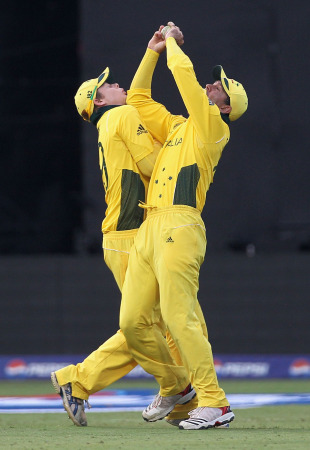
Talk of surprises..It is very hard to expect surprises from Ricky Ponting. Like it was no surprise to see a glum and grumpy Punter hurling the ball on the ground in disgust after catching a Canadian batsman; annoyed at his younger colleague Steve Smith for rushing in for the same catch. Now, neither the batsman nor his team were likely to derail Aussie world cup campaign. Perhaps, Ponting’s grumpiness reveals the stress he and his team may be feeling in this world cup campaign? May be all is not that well within the team?? However, the surprise was when Ponting offered an apology in an interview for his behavior, after the game! I did look for the morning Sun in the west!! While Aussies have been the only team to win all of their games so far, they do not look that dominant as in previous editions of the world cup. They were lucky to escape spin-test against SL due to rain. They will be tested tonight against Pakistan. Aussie batsmen have struggled to put up runs which is clear from the fact that not a single batsman, on these batting friendly wickets, has been able to post a three-figure mark so far. Countries like Netherlands and Ireland have batsmen who have got tons, but no Australian!! Now that IS a surprise.

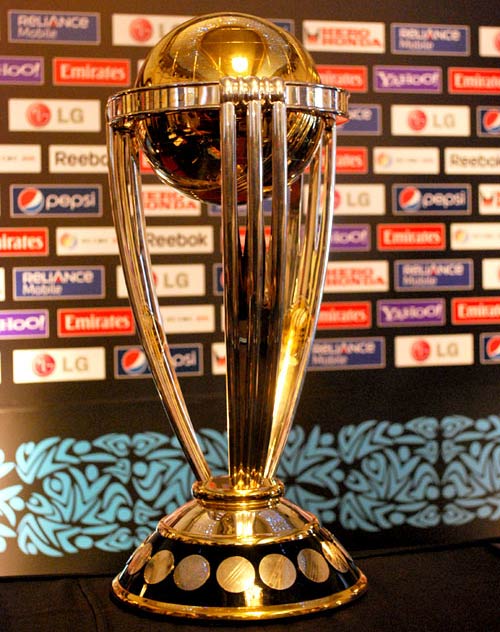
Really this world cup is the most open we have seen for a long long time. Hard to predict who will be able to wrap their hands around this trophy on 2nd April. And that is good to see. Any one from South Africa, India, Pakistan, Sri Lanka, Australia or even England could be holding the trophy ….could feel like an April Fool joke, a day late!!

Is this World Cup about minnows bashing?

Long awaited ICC World Cup has begun and results have been going as per seedings…so far. Meaning all the minnows so far have been bashed. And in some case, have been reminded about their status in no uncertain terms, as well. Perhaps Veeru’s emotions boiled over after his terrific innings against Bangladeshis; even though Indian win by no means was a washout. At 182/2 off ~30 overs only, Bangladeshis were in the scrap. To think of a cricket game as a revenge is a bit too much, but for those who suffered 4 years back at Port of Spain, the kind of back lash from the fans and everyone else, that you see only in India, it must have felt like redemption. If that defeat in the Caribbean was a motivation to play well, Indians succeeded. However, World Cups are more about proving you are a champion side rather than an ego trip. Having said that, Veeru is one of the very few players on the international circuit whose uttering on cricket and especially his opponents, have any thing  to do with ego. He talks as he bats….you see’em, you hit’em!! I would love to see Veeru continue with what he has begun. The way in which he was batting, he seemed to be in the zone to go past the double hundred mark. He will have plenty of opportunities in next 6 weeks to do so. Perhaps, this world cup is one for him. For too long, this mercurial player has remained in the shadows, in the ODIs. Time for him to stamp his authority in this format as well…

Three other games involving lower ranked teams produced disastrous results for the minnows. Only Zimbabwe gave a good account of themselves in the field; though they could not come even close to a modest Australian total. That is the problem with minnows. they will get caught out in either bowling or batting. And with the subcontinent wickets largely being batsman friendly, if their batting fails, they have no chance to remain competitive. The results have started the on-again off-again debate on whether to include associate member teams in the premier event like 50 over World Cup. Indeed, some feel even some of the regular test playing nations are not worthy of this honour!! Much as it has generated the brouhaha from ICC membership, there is a lot of truth in what Ricki Ponting has said. Premier tournaments are more about finding who is best rather than providing an opportunity for minnows to show how far they have progressed. There are other ways to do so. I would not use the arguments like: it is disheartening for lower ranked teams to loose massively or they hardly learn anything from such games etc. I think these arguments are patronising. Minnows need opportunity, not sympathy. One learns more about one’s capabilities from defeats.

In fact, I agree with Punter that it is best to restrict the number of participants to 8 rather than full membership of 10 nations (Zimbabwe is still a full member). If ICC goes with only 8 teams it won’t be anything new. Not every country playing Soccer gets a shot at the title and same is true for field hockey. Accordingly, out of 10 full members any two from last 4 ranked will miss out. To decide this, last 4 full member teams (ranked 7,8,9 and 10) will participate in a 10 team qualifying tournament, made up of 6 best Associate teams. Here is the opportunity for the minnows to play against weaker of the full member sides and knock them out of the main draw.

The way I see, the World Cup program can be divided in three stages:

First, a league phase where all 8 teams to play each other. At the end of league phase last two teams (no. 7 & 8) will be eliminated.

Second, teams 1 to 6 will then play in play-offs to determine semi final berths. This can be based upon old McIntyre 6 system used in AFL (Australian Rules Football League). Basically there will be three games: 

Game A 4 V 5  
Game B 3 V 6
Game C 1 V 2

From Game C (1 or 2) winner will get an opportunity to play against lowest ranked winner of Games A and B, while looser will play the highest ranked winner from games A & B. This allows both top ranked teams a certainty of a place in semi-finals while still giving 2 extra teams (no. 5 & 6) an additional chance to go to knock-out stage.

Finally, a knock out stage will determine the eventual winner.

This will provide each participating team sufficient opportunity to pick up form in the seven league games they will play. The beauty of this is, top ranked teams may play each other three times (once in league phase, once in play-offs and possibly in the finals) during the tournament. I see this scheme better than best of three finals between finalists. Total number of games in the comp will be 21 games for league phase, 3 play offs, 2 semis and one final = 27 games. This should be finished in 5 weeks with majority of games producing competitive cricket that should make the spectators, players and sponsors equally happy.

Sure, minnows have a role to play in the globalisation of the game, but through performance rather than quota system. The fact of life is, if you get an undeserved opportunity and get thrashing, it will neither translate into improved performance nor generate interest in the sport within that country. One-off upsets have not propelled the protagonists to higher level. India V Bangladesh’s game in this world cup is a proof of that.

Not Happy John!

So John Howard, ex-PM of Australia has failed another “election”. In some ways you can say that he lost a winnable one this time unlike the one he lost to Kevin Rudd in Nov 2007. I honestly thought he would have got used to loosing by now! Apparently, you can neither take out the politics from the politician nor a politician from politics!! Most Pollies in all countries have a very sharp sense of smell; they will smell-out power even from a chook-raffle! Top level sports administration, obviously represents a pot of honey to a bear; especially to those who are missing their power-fix. And when a sport interests lots of people and spins a few bobs, it is certainly like a full syringe to a junkie.

But you can fool some people sometimes. Little Johhny is now facing the barbs from the thorns he nurtured during his tenure. While he did some excellent work to turn Australian economy around, his ultra-conservative beliefs could not adept to the fast changing canvas of this small but increasingly multi-cultural society. For whatever reason, even at the peak of his powers, he was viewed by many (and not necessarily coloured population only) as a torch-bearer of long defunct white-Australia policy. His utter refusal to apologise to the aborigines for whatever reason, did not help his cause. For all I know, he may be merely simplistic; convinced that anything different from his belief does not merit any attention from him. Fair enough, for an individual. Unfortunately that is not a trait of a leader. Great leaders never divide; they have a gift to unite the most diverse. Looking at the diverse nature of ICC, where 10 full member countries represent a myriad of colours and cultures, I was surprised that Cricket Australia manipulated Howard above what would have been a very welcome candidate like the kiwi Sir John Anderson, especially when Australia already had their turn in Malcolm Grey. All those detractors crying foul and complaining today about subcontinent’s so-called power “abuse”, very conveniently forget that CA did exactly the same by bullying New Zealand cricket. CA did that simply because they could. Those who live in glass houses don’t throw stones at others.

While Australia and New Zealand had an option to choose their representative to head ICC, their representative was eventually going to represent all member countries. With an incredibly complex cultural mix of ICC, what you need is a candidate acceptable to all. If CA had applied that criteria, Howard would have failed in CA’s board room itself. I am sure CA board members are not naive. So the obvious inference is that they wanted to bring in Howard as their Axe-man; someone who would not hesitate to seek and chuck out the “rotten eggs”. After all, those backward third world and corrupt countries can only produce corrupt leaders who are now corrupting the beautiful English game. Why is that so hard to understand? What all the “chest-beaters” in Australia (I can actually hear a giggle from across the Tasman sea!) conveniently forget is that CA (probably with support from England) tried a political stunt which back fired. It happens; get on with it.

In politics, there is a critical process called face-saving formula. What now, is the face-saving formula for CA? Re-nominating Howard would be provocative and more importantly, likely to get  snubbed again! I am not sure if CA is actually that masochistic! Sir John Anderson is hardly going to accept the used-towel nomination, especially when his claim to the nomination merited first-choice. In fact I can see NZ completely washing their hands off this affair. CA can dig in their heels and refuse to nominate any one. That will certainly look churlish. Like it or not, political and economic reality is that CA has to participate in this process as a part of ICC board and nominate someone who can take the attention away from this affair and still become a respected board member and a fantastic representative of all cricket playing countries. Some one like Gideon Haigh (who seems to have a one-point agenda of BCCI bashing) claims there was no better nominee for CA than John Howard. Get real Haighy; Mark Taylor will be well respected and will contribute towards bringing closer, all cricket boards. And that is lot more worthy cause than mending the ruffled ego of little Johny…

Neither here nor there..

It was not surprising that Aussies and Ricky Ponting have started their preparation for the upcoming series against Pakistan. If you are looking for details on a cricket camp you sadly underrate Aussies. Their preparation begins by hurling a few testing verbal bouncers at their opponents. Ponting decided to “compliment” the new Pakistani test captain Shahid Afridi (any one remembers how many have come and gone?). Nothing new there. Aussies believe in softening the opponent captain first. However the quantum of statements about Afridi (“He hasn’t played much Test cricket of late, has he?” OR “he’s….not necessarily one of their best Test players” etc), especially after winning the last series, tells me that he may be a tad worried about Pakistan team getting together under this new captain. Read his last sentence…”…we just have to make sure we’re focusing on our little things to be the best team we can be when we play them.” Lovely! If you read that last sentence without the benefit of full text, you may be excused for searching for the rising Sun in the west! Don’t worry, Ponting and Aussies are as consistent as the heavenly bodies!! But hey, what is this “..I think we can sort him out in Test cricket for sure” thingy?? Mate, you don’t have to worry about sorting this opponent. If the last series is any indication, they are champs at doing it themselves! Aussies just have to turn up and leave the rest to their opponents!! I wonder, just wonder, what the Pakistan Board is planning, though. If you are seriously doubting your own team for loosing games for money, I wonder how can you keep this series clean that is being played in England, where there are huge number of Pakistani ex-patriots? May be by sweeping previous decisions under the carpet!

Is this “Match fixing” मौसम or what? Doubts are also probably raised about the Indian team’s performance in Zimbabwe! There is hardly anything worthwhile writing about the two “shocking” losses to Zombies…oops, Zimbos. What is surprising is the facile win by Indians against Sri Lankan team in the first game, probably the strongest team on paper in the comp. So are Indians being “obliging” guests? A few wins against a highly ranked team can divert the attention off the beleaguered Zimbabwe Cricket Association. Remember how Bangladesh got the nod of ICC? While not detracting from the terrific performance of the Zimbabweans, they may have benefited from the charitable gestures not only from Harbhajan Singh, but also the India selectors! How else can you explain experienced pacers like Ishant and Appam cooling their heels when a completely new look, new ball attack opens for India? Every time a team plays, it has to do so with the respect for the opponents. Sadly, Indian selectors have forgotten that. Or is it that India and Sri Lanka have decided that the hosts must play the finals; the opponents will fight it out for a spot in the finals??  It looks like Indian team management is absolutely committed to experiment in this series even at the cost of being thrashed. That can constitute match-fixing of a sort, isn’t it? Your guess is as good as mine. Seems to me that match-fixing is a disease easily traversing across the LOC!! Poor Raina is on a hiding to nothing…

Some very very interesting things have emerged from the whole IPL mess..I would strongly suggest all  read the copy of email from ECB Chairman Giles Clarke to BCCI President Shashank Manohar. Modern soap opera. If it is made into a sit-com it can easily give a run for the money to “क्योंकि सास भी कभी बहु थी”. Apparently Clarke himself is not that much popular within England County Cricket set up that makes up the ECB. Majority counties and especially those with major stadia are looking to increase revenue and Lalit Modi’s proposed “rebel league” in England was very interesting. While Modi is being portrayed as the biggest villain to hit cricket, it seems that the men present in Delhi meeting admire him as a visionary. All charges and his “bigger-than-the-game-attitude” notwithstanding, his contributions to BCCI and Indian cricket can not be denied. I hope current BCCI stake-holders understand that sooner than later. In last couple of days it has become apparent that the typically Indian ‘Narangi” (mandarin) unity is being exposed as the skin is being peeled off slowly in this IPL mess. Seems now that Sharad Pawar and even the interim  IPL chairman Chirau Amin are as “clean” as Lalit Modi and Shashi Tharoor. Looks like Modi is on a course to take a few down with him. Does it mean that the English motto of “Divide and Rule” will succeed again? Empire Strikes Back?? Will money win over the beauty of this game? Will the real Gods of cricket like GGT (Great God Tendulkar) become merely the ushers to the virtual Gods of Cricket like Modis, Clarkes, Pawars?? Keep watching the drama…at least it is better than the insipid cricket Indian team has been dishing out of late!! Legendary Kishor Kumar is blaring out loud and clear on my stereo “पैसा यह पैसा, कोई नहीं ऐसा, यह हो मुसीबत, न हो मुसीबत…”
Cheers Folks..

Pakistan embroiled in Match fixing…again!!

Heard that ICC’s anti corruption bureau has been investigating Pakistan’s tour of Australia..goodonya ICC! A bit late but देर आये दुरुस्त आये; better late than never. Or is it a case of “oops, we missed the most obvious so better start doing something now” syndrome? It smacks more of politics than a real intention of doing something good for the game.

Years back when Salim Malik, Mohammad Azaharrduddin and Hanse Kronje got exposed as match-fixers I could not believe any player would throw his innings (as a batsman I never wanted to get out) or his pride as a fielder to drop a catch or miss a stumping deliberately. I often spent sleepless nights for dropping a hard chance or a stumping while standing up, playing backyard cricket with a tennis ball on wet concrete floor. And I am sure I am not alone. What is it that makes a player do so? I still find it hard to believe that when for elite cricketers there is so much money to be made legally, a player would tank his game for money…isn’t pride in your success at least, as much important as money? Or am I too old fashioned? It is still difficult to digest that cricket may have changed so much where a man would not hesitate to sell his sporting achievement for a few bobs.

Of course, now there is enough smoke to infer that there must be fire; may be just a small amber burning somewhere. I was convinced about that after the Sydney test this new year. Pakistanis definitely tanked that game; Aussies had no business wining that one and all that brouhaha about the best win from death and all that crap was just that, crap!! Pakistanis lost, plain and simple. I have seen videos of Kamran Akmal’s keeping in that test a few times and could not believe that any wicketkeeper would go through such a horrendous spell in a day; not even a sixth grade, 130 kg, wide as a barn door and no-where-else-to-hide, reluctant with gloves and pads, back-stopper..In my opinion Akmal missed those catches, stumping and run out deliberately. What is not clear is, why? Could be for money or for proving a point?? May be the Pakistan camp was so badly divided that Akmal took it upon himself to “stamp his authority”..or may be he thought he could kill two birds with one “glove”, make his point and earn some dough? Wicket keeper is the engine-room of the fielding side and his abject failure can corrode the morals of the fielders quite easily and quickly. Akmal’s performance that day is an example of that.

There was sufficient doubt about Akmal’s performance even within the Pakistan camp when the coach Intikhab Alam asked his keeper to fall on his own sword. That done, somehow he returned to Pakistan team for the T20 world cup. Does it mean that if Akmal fixed the game, the team selectors have an equal role to play in the drama? How else can one explain his return? Probably all thought, Akmal behind the stumps, is the only fool-proof plan to lose!! May be everyone is on the gravy train!!

Then again, when your country is in strife like Pakistan is in today and suicide bombers are dime a dozen, it must be hard to keep focus on cricket. Pakistan as a state is falling on its own dagger; one that it has used for long against its neighbor is now aimed at its own heart. Terrorism, a product which was designed strictly for export market has now become a huge commodity for local consumption. Probably a poetic justice, but very sad! It is a chaos out there and the cricketers are only humans. What do you achieve by winning a cricket match when the value of humanity is next to zero? When there is no pride in winning, there is no pain in loosing. May be then the allure of money takes over. What a pity! I hope I am wrong since I am convinced that Indian V Australia is still a distant second to the Mahabharat of Indian V Pakistan..get your act together Pakistan. Believe it or not, you have a huge fan followers within India..even traditionalists would love to see Pakistan cricket up on its feet and playing trademark hard fought cricket…

Little Johnny to become Top Dog in Cricket

Australia and New Zealand have nominated ex-Australian Prime Minister John Howard as their candidate for the post of ICC president. It is amazing how New Zealand will always remain a small brother. Long term and proven cricket administrator from New Zealand Sir John Anderson was hoping to be nominated but was left holding the wooden base while the trophy was “stolen” by self-proclaimed cricket tragic, John Howard. I reckon poor Anderson has been hit for a “sux” (“six” for those uninitiated in Kiwi accent). There are even accusations of bullying  tactics by Aussies. Read this interesting bleat from NZ Herald. I believe the kiwis need not try anything in future, just give in to the elder brother..after all, sheep-power, doesn’t account for much, does it?
John Howard was a Prime Minister of Australia for almost 12 years and his reign coincided with good economic reforms and sound fiscal condition. I am not sure though, how much was his contribution to that. He was a smart politician though. Please ask his deputy who was kept waiting for ages after having been promised the top position, just because little Johhny changed his mind. But all that is a part of politics; I have seen worse in India. My beef is, that is if I have one at all, how come John Howard suddenly came into the picture for Cricket Australia? What prompted CA to nominate a political heavy weight, who has neither played much club cricket nor administered ANY cricket club let alone represented a state organisation? In fact, he can hardly be called even a sportsman, at least in my book. All in Rubgy playing countries would remember his sour-puss face while handing out winner’s medals to English team who beat Aussies in the Rugby World Cup final of 2003 in Sydney..classic sour grapes stuff that. But the behavior from the Chief Guest at a prestigious event and that too from the reigning Prime Minister of the host country, my dear Sir, can hardly be called cricket! Anyways, we can all forget that. No one likes loosing; whether playing or following, especially a one-eyed Aussie. If anything, it confirmed little Johnny’s immense love for the game of winning. I can live with that, especially as the recipients of his sourness were Poms; better known as the Kings of the Whines. But Howard’s foray into cricket administration is a completely different kettle of “Bombay duck”. I will come to that soon.
What, apart from his self-proclaimed love for cricket and a great understanding of wheeling and dealing as a politician, can Howard bring to the table that can help the game of cricket? Honestly, very little. ICC is by and large a toothless tiger and its Presidency a mere ceremonial position. What can he do that will impact upon the game? When an organisation depends upon its component members for its existence, it can hardly command respect. To be brutally frank, ICC is hardly in charge of the game. It is run by individual boards. Even after having every game now conducted by independent officials appointed by the ICC, it is still dependent upon its members for the revenue. This is the legacy of the Lords of English and Australian cricket who ran their fiefdom for ages by disregarding the power of masses (they can go and play football!!), concentrating on more important things like their gin and tonic, tea and scones. To that effect, BCCI is perhaps, the new Zamindaar. It was perhaps lucky that Indians and other subcontinent population took to the game of the Gora Sahibs like duck to the water. However BCCI has to be credited for a significant effort in taking the game to the masses rather than keeping it as an exclusive past time for the royals, as was the case before India’s independence. It is this power of masses that has changed the game for ever and given the subcontinent a force to loosen the stranglehold that England and Australia had over the game, in spite of doing precious little for the advancement of the game. I can not see any change to ICC’s ability in future to exercise similar clout without the contributions from the subcontinent.  Let us face it, for any game to prosper or indeed survive, participation is the key. English and Australian administrators were culprits in my opinion, of making the game exclusive for their elites. Probably Australian cricket administrators, definitely at local levels, can still be blamed for continuing that attitude. Much as Australian cricket team is thriving, one look at the junior rosters will indicate that the number of participants is hardly increasing. Compared to that, the scenario is completely different on the subcontinent. It is played, followed, seen and beamed live in subcontinent, more than any where else. With over 50% of world population as potential followers of the game (I am sure Chinese are coming!), and currently generating over 70% of revenue, how can ICC hope to equate its clout with the subcontinent boards, is frankly beyond me. One can be excused then, for thinking that ICC shall remain toothless and its Presidency a mere ceremonial position for a significant period of time.

My suspicion is that CA’s sudden love for John Howard emanates from the stand BCCI has taken by promoting Sharad Pawar to the position. Another politician of immense and one of the longest surviving “Ya va chandra Diwakar” (till moon and sun shine) clout in India whose name is synonymous with “Power”. Pawar like Howard has very little to offer to International cricket; in fact his only contribution to Indian cricket, if it can be called that, is to displace Jaggu (Jagmohan Dalmiya). That is of course as far as I know, and I stand corrected.
For those who may be unaware of the Machiavellian nature of International cricket administration, may not know how this typically English game suddenly became the Goddess of the subcontinent. It was BCCI run by Jaggu who wrested this prized possession from the grasp of blissfully unaware and sleeping Lords; blissfully unaware of the potential explosion, if it could be taken to the commoners. Much-maligned Jaggu the Marwari, who can squeeze a dollar out of every cent in anyone’s pocket, sometimes even before it is earned,  is to be credited for supreme financial position BCCI has reached as one of THE richest sporting bodies in the world.  And by default ICC and ALL other cricket boards in the world are enjoying the fruits. ICC has been living a life of default for ages..that is the nature of the beast. Due to Jaggu crashing the Lord’s party in the Long Room, ICC had no choice but to set up a rotation policy where cricket board of EVERY full member country playing the game, would nominate President for a period of 2 years. Before this, every decision was taken at the behest of the England and Australian boards, who even had the veto power. Jaggu was the first “democratically elected” ICC President. For those interested in reading further, please read Graham Halbish’s biography “Run Out”, where he mentions about “Project Snow” to counter the alleged threat in 1997, from BCCI and other subcontinent boards to split the game on the basis of colour, if Dalmiya, who had more votes than Malcolm Gray of Australia, was not elected to the Presidency of ICC. Due to that rotation policy, better known in my book as “agree or loose our chaddis” democracy from the Lords, Sharad Pawar will be the ICC President from 2010 to 2012 and now, little Johnny will do the honour from 2012 to 2014. Sorry for the detour folks.
There is though, one corollary to the above presumption that ICC will remain toothless for a long time. It can change, if BCCI itself decides to make ICC stronger! It will be effectively same as before with India being possibly a bigger partner at the table shared by England, Australia and perhaps SA. It will be interesting to see what Sharad Pawar does when he takes over. That can change the complexion of ICC and then Howard’s appointment can become meaningful. To my mind, that seems to be the only way forward for the English and Australian boards. Even if that happens, I can not see BCCI loosing its stranglehold on the money purse and power reins within the ICC; unless of course new members like China and USA tilt the balance away from BCCI. A distant possibility.
That brings me to the Bombay duck and curry pies. Any one who takes up the top job of running cricket (heck, that is not correct, ICC ruins more than runs, but I will let that go to the keeper), will need to become extremely aware of the sensitivities of the subcontinent. No doubt little Johnny has the wherewithal to wheel and deal; it has been his life. But it will be an interesting challenge for him to adjust to the colour of cricket these days. Based on his performance as the Australian PM, one may be excused to doubt his ability to sit through a Bollywood show without cringing. Having said that, I have a feeling that he can adept to it because that was his only positive point. The only point of interest is, whether he will be a meek ICC President or try to impose as is his nature. As a part of previous British Commonwealth, sub-continent countries especially India, have developed a very sensitive skin to perceived racism. Earlier the population accepted that as norm and moved on. The current generation, having exorcised their demons have become very expressive and often, rightly or wrongly, tilt to the other extreme. In this climate, an obstinate personality like John Howard will face some very stiff challenges to convince the significant half of the ICC that he represents every one. I fully agree with Murlidharan, who once decided not to tour Australia after copping sledging from the then PM, John Howard, about his bowling action! People have long memories. Little Johnny may fancy himself as a bit of a spinner, but he may find himself eating a humble curry pie. I am not sure if he would like that..
May be John Howard can bring something to the table; may be he can achieve as ICC chief what he could not do as a PM. A possibility, but can he, a staunch monarchist with strong conservative mindset (why is he called liberal?) rise above his prejudices? You know what, politics HAS bred stranger bed fellows than Pawar and Howard…