
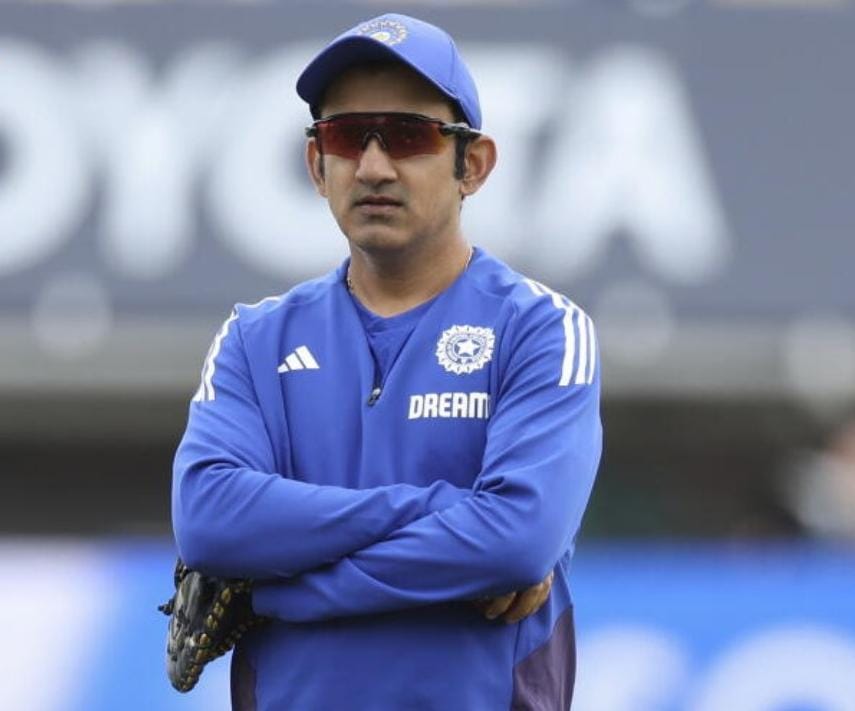
Under the guidance of coach Gautam Gambhir, the Indian cricket team has set a few new records. While the team has achieved notable success in the limited-overs formats, it has also suffered shocking defeats in Test cricket and even in the T20 format, where India has traditionally been considered one of the strongest teams. Alongside winning trophies such as the ICC Champions Trophy, the Asia Cup, and the ICC T20 World Cup, India has also produced some unexpected results. These include a 0–2 series defeat to Sri Lanka in 2024—the first such loss in 27 years. Then, just last month, came a humiliating 0–2 whitewash in the T20 series against Ireland. Following that, England thrashed the T20 world champs 4-0; thanks to the rain Gods the series result wasn’t 5-0!
Ever since Gautam Gambhir became India’s coach, he has attracted more attention than the team itself. There could be several reasons for this. Some cricket commentators and social media observers have claimed that his appointment owed more to political reasons than to cricketing credentials. The primary reason for such speculation is perhaps his recent political career. Gambhir’s coaching résumé before becoming India’s coach was virtually insignificant. He had never held the responsibility of coaching any team. His only experience was serving as a mentor for IPL teams for two years, and that too during his tenure as a BJP Member of Parliament from 2019 to 2024. Naturally, such an appointment raises questions, especially when success as a cricket coach is difficult to measure. Furthermore, Gambhir’s arrival coincided with the somewhat premature retirements of senior players such as Virat Kohli and Rohit Sharma. It is therefore understandable why some suspect that his appointment may have had motives beyond cricket. Cricket fans like you and me, who rarely have access to the truth about the inner workings of the Indian team, are often left relying on our sixth sense to separate fact from rumour.
Before Gambhir’s tenure began, India had never suffered a whitewash in a three-Test home series. New Zealand had never won a Test series in India. In fact, no visiting team had won a Test series in India since 2004. All these records were shattered when New Zealand won the 2024 series 3–0. As if that was only a warning of bigger shocks to come, South Africa defeated India 2–0 in a Test series in 2025, once again completing a whitewash. Another unwanted feather in coach Gambhir’s cap. Yes, there are two or three ICC trophies to provide some consolation, but the history of his coaching tenure appears more stained by these failures than decorated by success.
After the collapse in the Test series against South Africa, India went on to win the T20 World Cup. The joy of that triumph overshadowed the Test debacle. But India’s embarrassing T20 series defeat to Ireland has reopened those old wounds. The celebrations following the victory on 8 March 2026 did not last very long. Ireland had failed to progress beyond the first stage of the World Cup, managing only a single victory. Yet, just three months later, the very same team whitewashed the world champions. I agree that India did not send its strongest team to Ireland. Even so, India’s second or third-string side should have been capable of defeating an Irish team that could hardly be regarded as a major cricketing force—at least on paper. But the team’s supporters had absolutely no expectation of such a shocking performance. One question naturally comes to everyone’s mind: Is Mr. Gambhir very seriously preparing Indian cricket fans for even bigger shocks ahead? Results like these are enough to make even an atheist cricket fan start praying!
During Gambhir’s tenure, remarkable victories and shocking defeats have arrived with almost equal speed. Cricket lovers like you and me feel as though we are riding a roller coaster. Winning and losing are both integral parts of sport. But when a team’s form fluctuates so wildly and so quickly, like a yo-yo, it is only natural to feel dizzy. During the 1970s and 1980s, India was famous for its unexpectedly fighting performances. The only problem was that nobody could predict when the fighting Indian team would actually turn up—not even the team itself! Today, Pakistan wears that crown. Looking at India’s current roller-coaster performances, one cannot help but wonder whether Pakistan may soon lose that distinction! Let us hope that either Mr. Gambhir or the BCCI selectors wake up before long.
When Sourav Ganguly took over as captain of India, a noticeable transformation began in the attitude of Indian cricketers. Under Mahendra Singh Dhoni’s leadership, this change became even stronger, and under Virat Kohli’s captaincy, it reached its peak. The circumstances surrounding the end of Kohli’s captaincy remain an unsolved mystery. However, under Rohit Sharma’s leadership, India continued to play with the same fighting spirit and remained a team that was extremely difficult to beat. Yet within the corridors of the BCCI, there was a growing feeling that both Virat and Rohit were approaching the end of their careers. In particular, despite Kohli’s steadily declining Test performances, his stature in international cricket had become so great that removing him from the team appeared almost impossible—especially when the selectors did not receive strong backing from the gentle and accommodating coach Rahul Dravid. Therefore, once Dravid’s tenure ended, it appears that a plan was put into motion to appoint a comparatively inexperienced but firm-minded coach like Gambhir. This suggests that Gambhir’s selection may have been driven less by the long-term advancement of Indian cricket and more by the immediate objective of ushering Virat Kohli and Rohit Sharma towards retirement and rebuilding the Indian team. Whenever established players retire, every team goes through a period of disappointing results. It can certainly be said that, following the retirements of these two outstanding players and Ravichandran Ashwin, India has performed reasonably well overseas. What remains shocking, however, are the two crushing home Test series defeats.
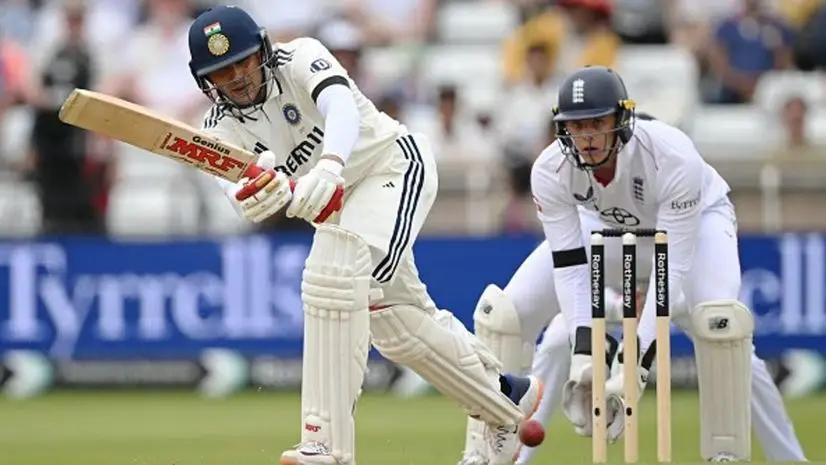
Were these defeats simply the result of changes in personnel? In situations like this, it would be unfair to point to any single reason. However, an analysis of both the New Zealand and South Africa Test series reveals one clear pattern. India’s batsmen struggled badly against the opposition’s spin bowling. The team management requested heavily spinning pitches, but the decision ultimately backfired on their own team. On one hand, they underestimated the quality of the opposition’s spin bowlers. On the other, they overestimated the ability of their own batsmen to play spin. During both series, it became evident that India’s batsmen and bowlers are now more comfortable on faster pitches offering some bounce than on sharply turning surfaces. Over the past several decades, heavily spinning wickets have become increasingly rare in India’s domestic competitions. Most pitches now provide good pace and bounce for four or five days. This is precisely why India has produced a continuous stream of quality fast bowlers over the past two decades, whereas the supply of spin bowlers has not been as abundant as it traditionally used to be. So yes, the batsmen’s inability against spin was certainly one factor behind India’s collapse. But in my opinion, the greater cause was the strategy of preparing excessively spinning pitches. Such decisions lie more within the control of the team management than the players themselves. It seems to me that Gambhir’s inexperience as a coach, combined perhaps with his tendency to focus intensely on a particular idea, may have contributed significantly to this mistake.
Very few batsmen in world cricket—not just in India—have been as accomplished against spin bowling as Gautam Gambhir. Quite often, something that comes naturally to you as a player may not receive the same attention when you become a coach. Instead, your focus may shift elsewhere. Even after suffering a crushing home defeat against New Zealand, Gambhir was unable to alter his strategy against South Africa, resulting in another heavy defeat. This perhaps also points towards a certain degree of stubbornness. It is often the case that when a player becomes a coach, it takes time to develop the habit of seeing the bigger picture rather than viewing the game solely through his own perspective. Furthermore, if the individual is naturally stubborn, changing one’s approach can take even longer. As a coach, one must develop the ability to understand the strengths and limitations of every player in the team—a task at which even the greatest players can fail. I will cite just one example of a truly great player who could not become a successful coach: Greg Chappell. To some extent, the puzzle surrounding coach Gautam Gambhir appears equally perplexing.
For now, the ball is in the BCCI’s court. Only time will tell how long a rope is given to Mr. Gambhir.

 Switch Hit