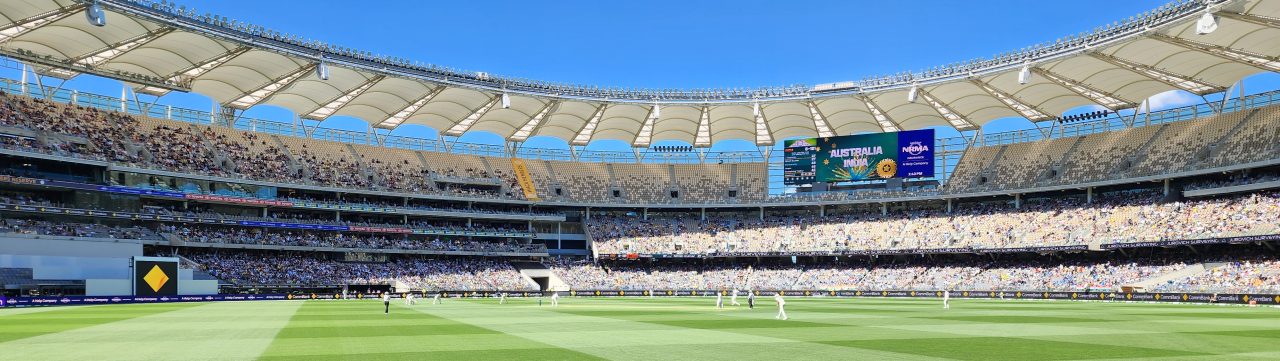
DRS through a Microscope. Eagle Eye or Hawk Eye, but not the Bull's Eye!!

Is DRS a Decision Review System or Dead Revived System? Looked like it was laid to rest after India’s tour to the Old Blighty, when ICC declared it no longer mandatory. However, no sooner did the Indian team arrive down under, the issue has been raised thanks mainly to the Eagle Eye technology owner or supporter, Channel Nine, who seem to be convinced that their word on everything in world cricket has to be final. Sky TV commentary team in England did the same and gleefully, trumpeted poetic justice, every time a decision went against Indians…till VVS Laxman was reprieved by the so-called infallible “Hot spot” technology (use of Infrared camera to detect contact between bat and ball). Michael Vaughn’s infamous tweet about Laxman’s cheating by applying Vaseline on the edges of the bat to “hide” the hot spot, proved at least one thing, irrevocably; EVERY ONE is still suspicious about the capability of ANY technology to be 100% correct. Something that Indian captain Mahendra Singh Dhoni has been saying for ages. That shut up the Sky TV channel commentary team for sure. Poms and Aussies have this endearing quality of coming around to what is obvious only after they have suffered!!!

However, looks like the inventors of the technology and investors of big bucks in them, are not going to die so easily. Especially when you have the best possible medium of TV and assured contract to beam free-to-air live cricket to the masses, you want to use that to push a technology even if it is still in its infancy. That is, what DRS actually is. Not surprising then, why after the first day of the Boxing day test in Melbourne, Crime master Gogo was seen asking all and sundry, “Yeh DRS DRS Kya Hai, Yeh DRS DRS Kya Hai?”

I want to show you DRS through my microscope. Before we do that, however, understand this; DRS is not merely applying all available technology to arrive at correct decision most of the times, as it is touted to be. Let me clarify. DRS or Decision Review System is a “PROCESS” set up by ICC to give SOME opportunity to players to question on-field umpire’s decision. IT IS NOT AN ATTEMPT AT GETTING ALL DECISIONS 100% CORRECT!!! This is where a cricket fan is being taken for a ride.
The reason for my above argument? In every innings, both teams are given ONLY TWO opportunities to question umpire’s decision. Once you loose both opportunities, you have no right to question Umpire’s decision. In other words, after you have lost both of your appeals, an umpire is ALLOWED to make mistakes!!! Let us presume this system was used in the infamous Sydney test match of 2008, of monkey-gate fame. Even before Andrew Symonds was given not out to a blatant thick edge of Ishant Sharma, Ricky Ponting was reprieved by Mark Benson, off Saurav Ganguly; a possible faint edge. Let us say that Indians reviewed and had lost that appeal since hot spot is not necessarily a full-proof technology. Subsequent to that, on that first day itself, Andrew Symonds was reprieved twice on stumping appeals, once by the third umpire who had the benefit of the technology of a slow-mo replay, even when it was obvious to a blind that Symonds was out. Indeed, even the Channel Nine commentators had given the verdict as out. This means Indians would have lost both of their appeals on the first day itself, possibly even before tea!! What good would this so-called high tech DRS would have done for the good of cricket in this case? The results could still have been the same; jaundiced decision making from one-eyed and motivated umpires.
There is also another example of MS Dhoni given out in spite of the bowler having over-stepped in West Indies this year, simply because the technician brought up WRONG REPLAY, or better put, replay of legal delivery stride from another delivery!!! All that talk about technology being savior of the world cricket makes no sense when the control of decision making goes into the hands of a total outsider who may be motivated by commercial interest of the technology provider.
Last week I heard Channel Nine commentator Tony Greig lamenting about the lack of use of the Eagle Eye that they use to judge the umpiring performance. He went on and on like a broken record about how Indians through their power of money are in fact acting against the interest of the game!! He also quoted other sports people from USA who, according to him, were astonished that Cricket refuses to use technology and has still remained an18th century sport. Ah, the beauty and benefit of having the platform to dish out drivel!! The only choice poor audience has is to shut off the TV, isn’t it?? There were references made to another ball tracking system called Hawk Eye, which according to the geniuses at Channel Nine is a very inferior technology, merely due to the number of frames captured per second, and perhaps the reason why Indian cricketers hate DRS.

I brought out this issue in one of my previous blogs, and received a very interesting comment from one reader who claims to be the inventor of Eagle Eye tracking program; one that is touted as Bee’s knees by Channel Nine and the whole of Australian fourth estate. Paddy’s comments are presented below, verbatim:

–>“I wrote the Eagle Eye tracking system. It works like this… All the measured points over all frames triangulate to 3D ball positions of the flight. Given there is a factor of noise, pixel error, measurement error etc, these form a probability distribution. The system then attempts to solve a multivariate equation of flight that most closely matches this distribution. This involves deriving obvious things like initial position and velocity, flight characteristics such as lift and drag, and more importantly fluid dynamics tailored to the flight of cricket balls. There are a few tricks in here that compensate for numerous things that cannot be measured. The result is a large equation that can be used to regenerate the ‘actual’ trajectory of the ball and extend it past the point where observations cease (ie impact on the pad). Having more frames helps this process. As you pointed out, the physics after the bounce is completely separate from that leading up to the bounce. The more data that can be collected post-bounce, the better the chance of calculating the more obscure components of flight. Operating at 230fps means every frame captures about 10cm of travel. So most of the time, enough data is captured for an informed prediction. When there is not enough data, there is a roll-off built into the system whereby factors such as swing, lift, drag and even bounce deviation cannot be sufficiently derived. Attempting to do so generally leads to solutions that look wrong. The best answer in extreme cases is found by dropping the higher-order components of drag, ignoring lift, assuming the ball does not deviate after bounce, and presume no post-bounce swing is in effect. The system is not bullet-proof, and I disagree with the assumption that “Eagle Eye is twice as good as Hawk-Eye”. The two systems are totally different and each have their strengths and weaknesses. However, it is a fact that the more frames you capture, the better your chances of predicting in extreme situations. I think it’s important to remember that the UDRS was supposed to prevent gross misjudgments. There are limits, and they should be scientifically explored. The ICC ‘testing’ done on either system is a joke.”

There you go….I have no way to confirm that the writer is the originator of the Eagle Eye program or that he is not. However, the comments very well describe the logic behind defining algorithms for tracking the flight of the ball. It is obvious from the above comments that there are sufficient doubts about the validity of either tracking system; and most importantly, none of the system is “scientifically explored” sufficiently. Exactly the point I made in my blog. Also, interestingly, the originator accepts that the algorithms can not predict accurately, complex factors such as “swing, lift, drag and even bounce”. This means, prediction of the flight of the ball post impact (after it has been intercepted by the batsman) is very difficult. Perhaps that is why we saw the drama of DRS not applied during the World Cup, when the distance between the pad and stumps was more than 2.5 meters. Indeed, increased data in the form of more picture frames per second gives a better opportunity to predict the flight of the ball post impact, and to that effect Eagle Eye may be better than other technology. However, even high frames per second will not be able to predict changes in bounce, pace and turn off the wicket, that eventuate as the pitch changes its nature during the course of the test match. Forget about the difference in every ball that a bowler is able to employ, e.g. cocked wrist versus loose wrist while delivering a ball, that can generate different pace off the wicket. So when one can not be sure about the validity of this tracking system to predict the flight of the ball from day one to day five on the same wicket, how can one be confident that it can perform with acceptable accuracy, across all types of wickets; from a low slow subcontinent to a spongy English to a Perth or a Centurion bouncing one. One thing is certain: the originator of the Eagle Eye is saying that ICC has not done sufficient testing on either tracking system!!! Does it not then, sound a bit rich, Channel Nine’s constant tirade against Mahendra Sigh Dhoni, or his team or indeed BCCI in not accepting DRS? Why this uni-directional tirade using questionable evidence, called BCCI bashing? Ihas now become the favorite past time of some Cricket playing countries ……Tony Greig, take off that mask of being a savior of world cricket please. You are nothing but a mouth-piece of a commercial venture, looking to pass off its yet incompetent technology. Cash for comments, of course, what else??
Let us not forget that DRS does not consist of technological solution to get only LBWs correct.It also includes other technologies like “Hot Spot” to detect a nick; something that looked to be the only infallible component of the system, till that fateful Laxman-Vaughn episode. Now that technology looks as much dicey as the tracking system. Perhaps the only technology that is close to being 100% correct is the pitch map; to confirm if the ball has pitched within the statutory area as per the LBW law. I full heartedly agree that this technology must be used to provide on-field umpire the required support. As for other decisions like stumping and run outs, TV slow-mo replays have been accepted long back, even though they have produced wrong decisions, for a variety of reasons. Andrew Symonds’ stumping, is a cases in point.

http://www.youtube.com/watch?v=92zqspN3W2c&feature=related

So it is obvious that there is sufficient doubt about the capability of the tracker system to predict the path after impact. Let us leave that aside for a moment and accept that even if not 100% certain, the technology will give a prediction of the flight of the ball, somewhere close to an umpire’s eye and brain. I am ok, if the technology comes somewhere close to human capability, since it has one thing which is better than a human mind. Technology can not be “pressurized”, like an umpire can be, under extreme conditions. So one can accept the fallibility of the system to the level of a human mind; with a caveat…”as long as ICC officials manage the technology”. This is to prevent commercial interests from influencing the decision making. Or tomorrow’s headlines will read something like..”TV technicians being investigated for Match fixing”..
Apart from the uncertainty of technology, my grouse against the DRS system, is the process of giving right to the players to challenge umpire’s decision. That is eroding the very basic tenet of this game; a player shall accept umpire’s verdict. Yes, on-field umpires can do with the support from technology, no doubt about that. But instead of players being given TWO appeals to get their decision right (!!), I would like to see that process completely in the hands of on-field AND third umpires. Both should work in unison. The TV umpire should have a say in every contentious decision and he should have a right to communicate or indeed over-turn on-field umpire’s decision if he sees evidence to do so. In this system on-field umpire’s role does become more of a constant partnership with the third umpire. There is a potential for slowing down of the game, but by now it seems every one has accepted that extension of the game time is not important if right decision could be made. Don’t know though, how this will allow ICC to maintain minimum 90 overs a day requirement. Let the players be players rather than trying to be umpires also..
As the system has “evolved”, there is a slight change to the name. UDRS has become now DRS. Looks like ICC has decided to take the U (Umpire) out of the name. Yes, literally that is what the system is meant to do. While the supporters of this so-called bee’s knees technology claim that it is to support umpires, in actual effect, its practical purpose is to take an umpire out of the decision making…..slowly slowly, completely; well, if not today, tomorrow.

Malcolm, who are you Conning?

Reading an interesting article by News Limited’s Senior Cricket Correspondent, Malcolm Conn in the Sydney Daily Telegraph of Sat, 6-Aug-11, just confirmed a few things I already know. Since this article is unavailable on-line, it is given below verbatim, in full, including two pictures.
_________________________________________________________________________
 Why India doesn’t want to know about the technology that Australia can bring to Umpiring decisions: Malcolm Conn

These photos prove why India has been using third rate technology as an excuse to stop video umpires ruling on the leg before wicket decisions.

The photos (left) with the spars red dots highlights the cheap and inaccurate system the International Cricket Council used during the recent World cup, which raised India’s ire.

The tightly packed white dots in the photo (right) shows the space age technology Channel Nine began using last season and will use again for the New Zealand and India series this summer.

The system used by the ICC through normal television cameras tracked the ball 26 times on its journey from bowler to batsman. Channel Nine’s new technology, using six high speed cameras and fibre optic cable, tracks the ball 130 times on the same path, offering far greater accuracy. Nine now uses Eagle Eye, which is twice as good as the previous Hawk Eye and far superior to ICC’s third rate system.

Executive producer of Nine’s cricket coverage, Brad McNamara, fears confusion this summer because the full system will be used in two Tests against New Zealand but lbws will be excluded for the following series against India. “It will be interesting to see what happens,” McNamara said.

Ricky Ponting is baffled as the rest of the cricket world by India’s refusal to use technology that improves the accuracy of umpiring decisions.

END OF THE ARTICLE
_________________________________________________________________________

There you go…I am sure you will be surprised as much as I am to read some oxy-morons in above writing. By calling ICC’s current technology (or Hawk Eye) as third rate and THEN saying India is using it as an EXCUSE to prevent UDRS is a typical jaundiced-eye, chip-on-the-shoulder, holier-than-thou western writing born out of immensely undiluted acidic reflux, that simple people like me call “jealousy”. If the Hawk Eye is third rate (he has used that qualification twice in the article), then isn’t India’s stand on refusing to use it vindicated? D’uh?? Probably, Malcolm, that is what you also want to say, but something prevents you from saying? If the so-called high-profile writers are really keen to assess truth, won’t you expect them to ask that question to the businesses commercializing the technology or its inventors? Won’t it be logical to ask why Hawk Eye has NOW agreed to do more tests and generate data before ICC can accept it, only after BCCI and Indian team refused to accept it? I will tell you why. Because that would simply vindicate what Indian players and BCCI all along have been saying; that technology is still not fool-proof and they are correct in going with the on-field umpire’s decision!! Instead of calling that as the real spirit of cricket, Indians are being pole-axed, in writings and TV commentaries. If claims in Malcolm’s article are correct about Hawk Eye being third rate, it makes me wonder why all Pommy commentators on Sky commentary team in the current India-England series, are so keen to incessantly blame BCCI for not accepting that.

Let me be very clear; I am seriously impressed with all the “space-age” technical mambo-jumbo about high fps (frames per second) pictures delivered by fiber optic cable and ball tracking capability increasing by 130/26 = 5 times!! Wow! That’s awesome, isn’t it? So Malcolm, could you please tell me what fps is required now, to make the on-field umpire redundant??

I am yet to see hard core evidence that DRS of any kind, Hawk or Eagle, is fool-proof. And if not fool-proof, why not wait till more evidence is available? I will tell you why. Inventors need money to perform their experiments to generate data. By clever marketing gimmicks like these, all they are trying to do is get ICC and individual cricket boards to cough up the money to fine tune their “third rate” technology. What they do with that technology after it is developed sufficiently to be commercialized for other uses, is no concern of cricket boards or ICC. The commercial exploitation will line up the business’s pockets. Hey, here is a gravy train. Let us jump on it; poor old cricketers who are now writers or commentators of some reputation, and those who have missed the gravy train, just can’t resist this, now can they? And who would blame them? Of course for poor, all believing simpleton cricket fans like me (don’t know about you), it is all in the interest of improving the game….oh yeah??

Don’t get me wrong; I am no techno-phoebe. Quite the contrary; for a person who had not seen a computer, let alone use it, till the age of 37, I am pretty good at taking up technology. (if this blog is any evidence). I love the idea of incorporating new technologies to improve the game. However, being a scientist, I like to see experimental data under controlled conditions. Malcolm doesn’t give any proof to his claim in this article, that “Channel Nine’s Eagle Eye is TWICE as good as the Hawk Eye, and far superior to ICC’s third rate system”. I am sorry, mate, I can’t understand. If the ball tracking along the path is 5 times more (130 to 26) than ICC’s third rate Hawk Eye, isn’t it 5 times more efficient? Modest Malcolm, certainly sounds oxy-moronic! Perhaps Eagle Eye has some data somewhere, but they are not comfortable in releasing/publishing that as yet. Perhaps by utilizing the big guns of the fourth estate (and fifth, being TV) they are aiming to obtain sufficient funding for their project? Cash for Comments? Those of us who live in Australia and are avid fans of yak-back radio, would surely recognise the syndrome, won’t we??

If I was a Hawk or Eagle Eye inventor, first thing I would do is to publish that data to get confidence of players, officials and fans like me. I am yet to see that.

You know what, Malcolm, you have still missed the most important point in all this. Improving the ball tracking efficiency is great. What I fail to understand, is how does it improve PREDICTIVE PATH of the ball AFTER it has been intercepted by the batsman? What algorithms are used to extrapolate that path? Try and pitch the ball with the same energy (or pace) on same spot on day one and day five wicket, and I am sure it will travel differently; bounce and carry will vary significantly. Even when the ball hits either seam or the leather sides, it travels differently, from the same spot on the same wicket. That is one reason why top quality cricket is played on turf and not synthetic wicket. That is why we have been lamenting so much in recent times that cricket has become so much of a batsman’s game, as wickets are now covered. That is why labels like “Flat track bullies” are applied to recent high scoring, record breaking batsmen when compared to past greats like Bradman, Hobbs or Hadley. Also, if a bowler bowls with a loose or cocked wrist, the ball travels at different pace after hitting the wicket. Often the ball swings after pitching in certain conditions. How will the so-claimed space age Hawk or Eagle Eye totally dependent upon the software algorithms, be able to pick up all of that?

At the end of all these arguments, I believe a well trained/experienced umpire’s brain is the best available technology……still! Yes, they can be helped to some extent, by some technology to take the pressure off them. I like the ball pitch map, that tells an umpire without any doubts whether the ball pitched within the critical area or not. I am not convinced that an umpire’s decision about the predictive path of the ball after it has been intercepted by the batsman, will be any less accurate than a set of high tech, high fps camera feeding the optic fibre and a computer. If all the technology was better than a well trained human brain which can re-calibrate it self after every ball, using the available information (as compared to a static software that needs input from data interpreted by a human), then why do we need human umpires??? No balls, number of balls bowled in an over, bowler or a batsman transgressing on playing area; all that can be done better by a machine. So umpires will be required only to listen to the quality of sledging and enforce what is bandied around these days as the spirit of cricket? So human umpires will become Cricket Cops? You, all of those who seriously swear by DRS, can you imagine how robotic the game will be? OK, you may argue, as long as correct decisions are made. Fair enough. However, is there a guarantee that even with the best available technology, 100% correct decisions will be made? That is why I still prefer Rauf Eye or a Taufel Eye over a Hawk Eye or an Eagle Eye.

You know what, being humans, we will forgive a human error, some times, eventually; but not a machine. Believe you me, if we have machines controlling games, it will become far more acrimonious because there will be claims that machines are more easy to manipulate than humans. With the kind of high tech mambo-jumbo, not every one’s cup of tea to understand and control, the power of controlling the outcome of a game will shift into the hands of a handful of technicians, who instead of representing ICC and game, will be representing the commercial businesses owning/operating the technology. We saw how DRS was either manipulated or erroneously used in recently concluded  India V West Indies series, when the technician could not (or did not) produce correct replay frame to confirm that Dhoni was out of a no-ball!! How did the so called space-age technology help there? If you ask me, machine-run system in totality, is far more susceptible to manipulations than a human umpire.

Dickie Bird, the best ever umpire who stood in international cricket, in my opinion, is not fond of the UDRS. There has been a war of words between Ravi Shastri and Nassar Hussain in recent India-England series about the use of DRS, that clearly indicates to me, that not every one is enamoured by this, as yet. However, many Indian journos and fans have opined that Shastri’s use of word “jealousy” was a “tantrum”; some going to the length of calling Shastri and Sunil Gavaskar, BCCI “chamchas” or “pitthus”. Fact of the matter is, a majority of fans (prominently Indian fans) are sold on the marketing gimmick by Hawk Eye or Eagle Eye, without realising that there is not enough data presented to us; if it has been done to players, umpires and cricket boards, I haven’t heard about that yet. Hot Spot (Infra-red camera), the so-called fool-proof technology has proved to be not necessarily so, if we are to believe numerous comments made by the English past players and commentators on various media including tweets, that VVS Laxman survived a clear caught behind as hot spot failed to show up. And what about a totally unnecessary controversy that Vaseline can be used on the bat to create a cool-spot to cheat the Hot-Spot camera? The inventors have, since, confirmed that this is not possible. Hopefully, their inference is not driven by economical factors. Interesting thing, though, is that the reason why the whole of the Pommy Land was convinced that there was a nick, was due to a noise caught on the Snickometer. Wow! The same snicko, which till then had been considered LESS believable than Hot Spot!! How does that work? Why not, even once, did any Pommy commentator mention that the noise could be a creaking bat handle rather than an actual edge, something that was bandied around at every possible inexplicable “woody” click on the Snickometer, before Hot spot was used ? (If it was and I did not hear, my apologies)

You know what, the answer is simple, that is, if you bloody care to ACCEPT it. Poms and Aussies will always talk about only that evidence that helps their team….PERIOD!! Michael Vaughn even went to the length of calling a gentleman cricketer like VVS, who in these days of gamesmanship is like a long extinct dodo’s tail, a cheat. Poms have been so riled for long, by cheat label that was stuck on John Lever in Vaseline affair, that they have been itching to return the serve. To me, that is the real Colonial mentality!!!!

Don’t get conned by these senior players, commentators or even so-called writers like Malcolm Conn. They are not one eyed…..they are plain damn blind to any thing that is not in the favour of their team….Don’t you remember that cry from our childhood days…”Aapni tukdi Zindabad” (આપણી ટુકડી ઝિંદાબાદ)?? Our team always wins!…….and to talk about the Spirit of Cricket, in the same breath….GIVE ME A BREAK!!